

The popular advice is simple: buy a white golf hat because it looks clean and keeps the sun off. Half right. White looks crisp, but white alone doesn't make a hat sun-safe. A thin mesh cap can feel breezy while allowing more ultraviolet radiation through than a darker, denser crown.
That distinction matters when you're walking fairways under an open sky for hours. Your hat has three separate jobs: style, comfort, and protection. The first depends on color and shape, the second on fabric and ventilation, and the third on coverage and verified construction. Confuse those jobs and you can leave the shop with a sharp-looking cap that performs poorly where it matters.
Why the White Golf Hat Deserves a Second Look
A white golf hat has earned its place in the golf wardrobe. It works with navy polos, khaki trousers, all-white outfits, and the slightly chaotic collection of golf clothes that accumulates in every serious player's closet. It also photographs well, which is no small advantage when the round ends at the clubhouse and somebody pulls out a phone.
But the safest-looking choice isn't automatically the safest choice in the sun. A peer-reviewed survey of golfers found that 69% wore a hat while playing, while 68% said they always or often did so according to the National Golf Foundation's golf industry research. Headwear clearly matters to golfers, but wearing one is only the beginning. The hat still needs enough coverage, a suitable crown, and a construction that matches the conditions.
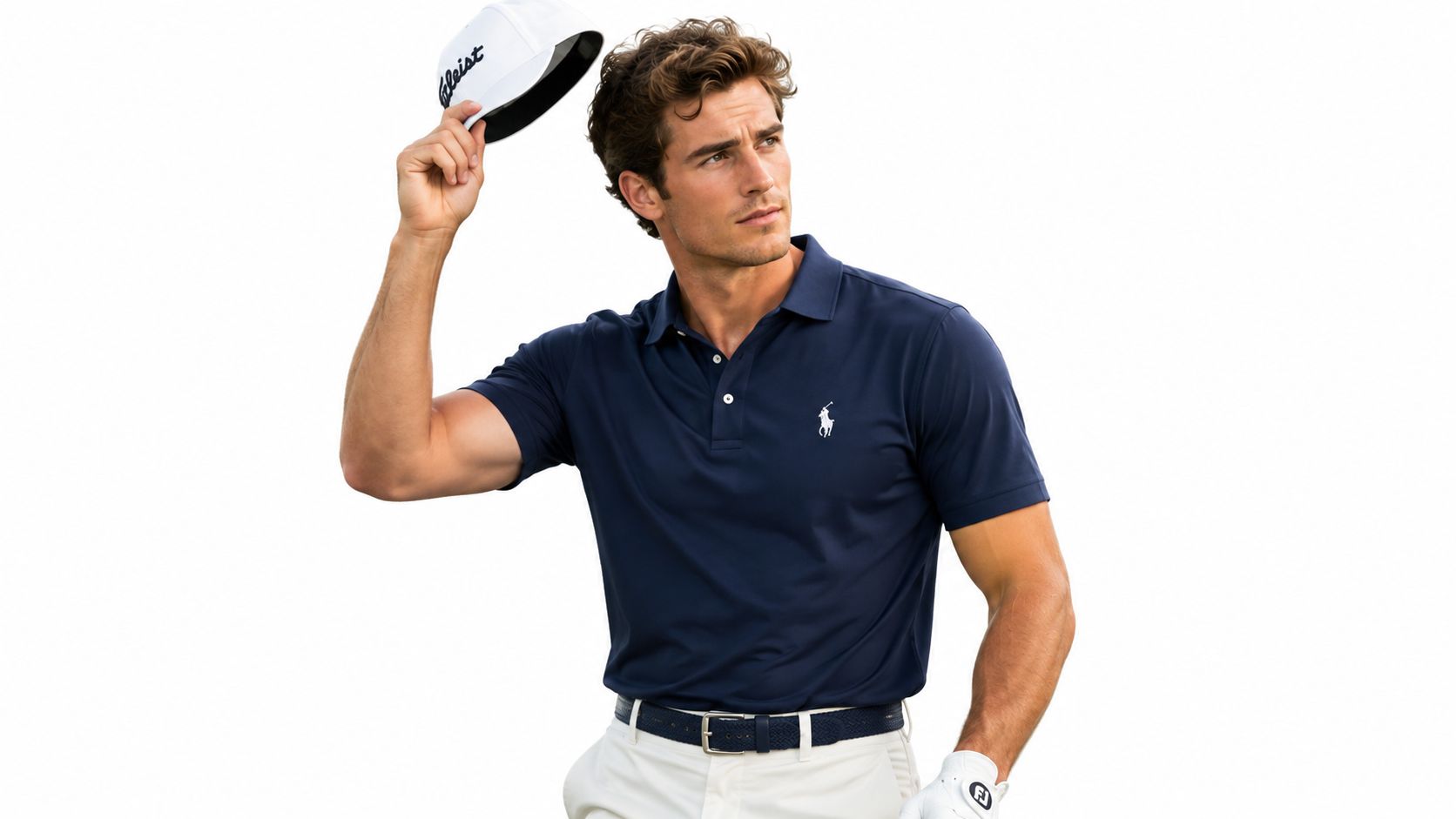
Separate the jobs before you shop
Think of a white golf hat as a piece of equipment with a style setting, not as a magic sun shield. Color influences appearance and can help limit heat absorption, while brim design and fabric density determine much of the actual coverage.
That's why I'm suspicious of vague product language such as “cooling,” “performance,” or “summer-ready.” Those phrases may describe comfort, but they don't prove ultraviolet protection. A hat can feel cool and still leave your ears, neck, and scalp exposed.
The right buying process starts with the question, “What do I need this hat to do?” If your priority is a polished look for casual rounds, a cotton twill cap may be exactly right. If you're walking in bright conditions, look harder at the crown, brim, and any documented UPF rating before you fall for the color.
Practical rule: Buy the white golf hat for its look, then verify its protection separately.
White remains a smart wardrobe choice because it coordinates easily and gives golf outfits a deliberate finish. Just don't confuse visual cleanliness with technical performance. The best cap is the one that looks good, fits securely, stays comfortable, and offers construction you can trust.
Crown Shapes, Brim Styles, and Fits Explained
Before comparing fabrics, learn the anatomy. “White golf hat” describes a color, not a shape, and two white caps can wear completely differently.
Start with the crown
A structured crown has internal support that keeps its front panels upright. It creates a sharper silhouette and suits golfers who like a traditional clubhouse look. A soft or unstructured crown folds more naturally, feels casual, and usually packs more easily. A low-profile crown sits closer to the head, while a high-profile crown creates a taller, more pronounced shape.
Your face shape matters, but comfort matters more. Rounder faces often look balanced in a slightly taller crown, while longer faces can work well with a lower profile. Oval faces are fortunate. Most shapes look natural in the middle ground.
Pick the brim with intent
A curved brim is the classic golf option. It shades the eyes without looking theatrical and usually sits comfortably during a swing. A flat bill gives a more streetwear-influenced profile, but it can feel visually heavy with traditional golf clothing. A visor leaves the crown open for airflow, though it provides less protection for the top of the head.
For a more detailed look at how brim design changes coverage and style, use this guide to golf hat brim shapes. If your taste leans beyond golf-specific silhouettes, you can also browse the brewery baseball cap for a useful comparison with casual baseball-cap construction.
Match the closure to your routine
Snapbacks are adjustable and easy to share, strapbacks offer a softer, more understated finish, fitted hats give the cleanest profile when the size is right, and stretch closures provide a forgiving middle ground. A fitted crown shouldn't squeeze your temples, and an adjustable cap shouldn't leave a bulky strap pressing against your head.
| Feature | Options | Best For |
|---|---|---|
| Crown | Structured, unstructured, low profile, high profile | Sharp styling, casual wear, compact fit, or added visual height |
| Brim | Curved, flat, visor | Traditional golf, streetwear styling, or maximum airflow |
| Closure | Snapback, strapback, fitted, stretch | Adjustable fit, subtle finish, precise sizing, or flexibility |
| Coverage | Standard cap, extended brim, visor | Everyday wear, added shade, or open-crown comfort |
Try the hat with your sunglasses. If the brim pushes your frames down or the crown touches the lenses, the shape isn't working for you. A white golf hat should disappear into the outfit, not become the only thing you notice.
Materials and Fabrics That Actually Perform
Fabric decides whether your hat feels pleasant after a fresh shower, survives a sweaty back nine, or turns into a sad, misshapen souvenir in the trunk. It also affects how well the cap handles embroidery, patches, and repeated cleaning.
Cotton twill delivers the familiar soft feel and relaxed texture many golfers prefer. It pairs beautifully with classic polos and khakis, but it can hold moisture and may lose its crisp shape when repeatedly soaked. Choose it for moderate conditions and lifestyle wear, especially if you care more about natural hand feel than rapid drying.
Technical polyester is the workhorse for active rounds. It tends to dry quickly, hold its structure, and carry printed graphics or embroidery cleanly. The trade-off is that some polyester hats feel less soft against the skin, so look for a sweatband that adds comfort rather than relying on the crown alone.
Cotton-poly blends split the difference. They offer a familiar appearance with more resilience than pure cotton, making them a sensible everyday option for golfers who want one cap for the course, errands, and the 19th hole.
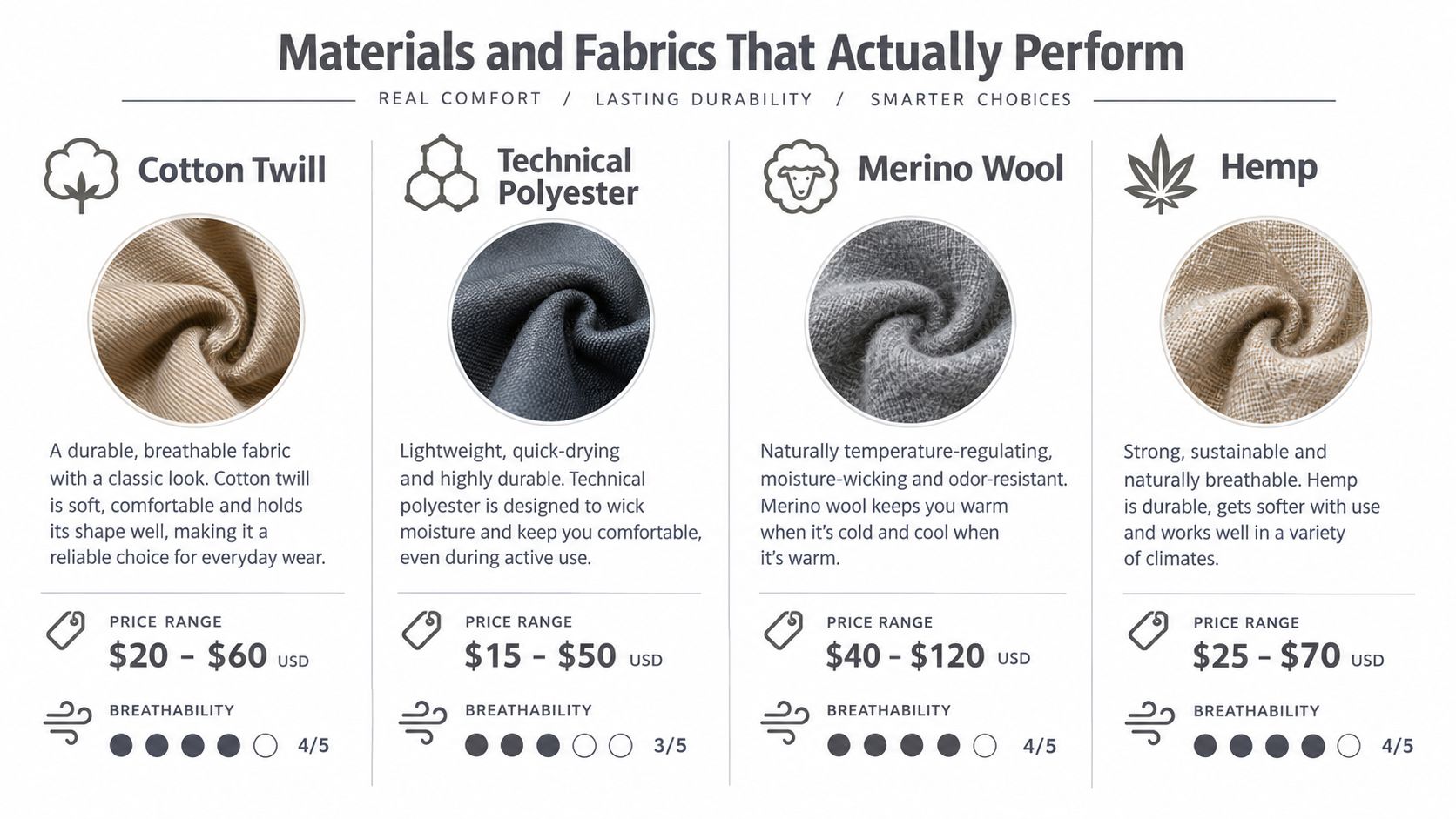
Read the fabric through the climate
Technical knits and mesh panels can improve airflow in hot weather, but ventilation comes with a coverage trade-off. Large perforations may feel excellent in a cart, yet they can expose more skin to ultraviolet radiation. A tightly woven crown with carefully placed ventilation is a better compromise than a cap that turns the entire top of your head into a window.
Controlled textile testing found black fabric surface temperatures of roughly 46.15 degrees Celsius compared with about 45.55 degrees for white fabric under solar exposure, while white textiles generally showed higher visible-spectrum reflectance in the same research from Shinshu University. That supports choosing a light-colored crown when heat absorption is your main concern, but it doesn't make every white fabric equally comfortable or protective.
Think about the sweatband too
The part touching your forehead often determines whether a hat feels premium. Look for a band that absorbs moisture without becoming scratchy, and avoid crowns that collapse when damp if you prefer a structured look.
Embroidery generally sits best on stable twill or performance fabric. Loose knits can distort under dense stitching, while patches add weight and may change how the crown sits. If you're buying a white hat for repeat use, choose material based on your sweat level, local climate, and willingness to wash it after rounds.
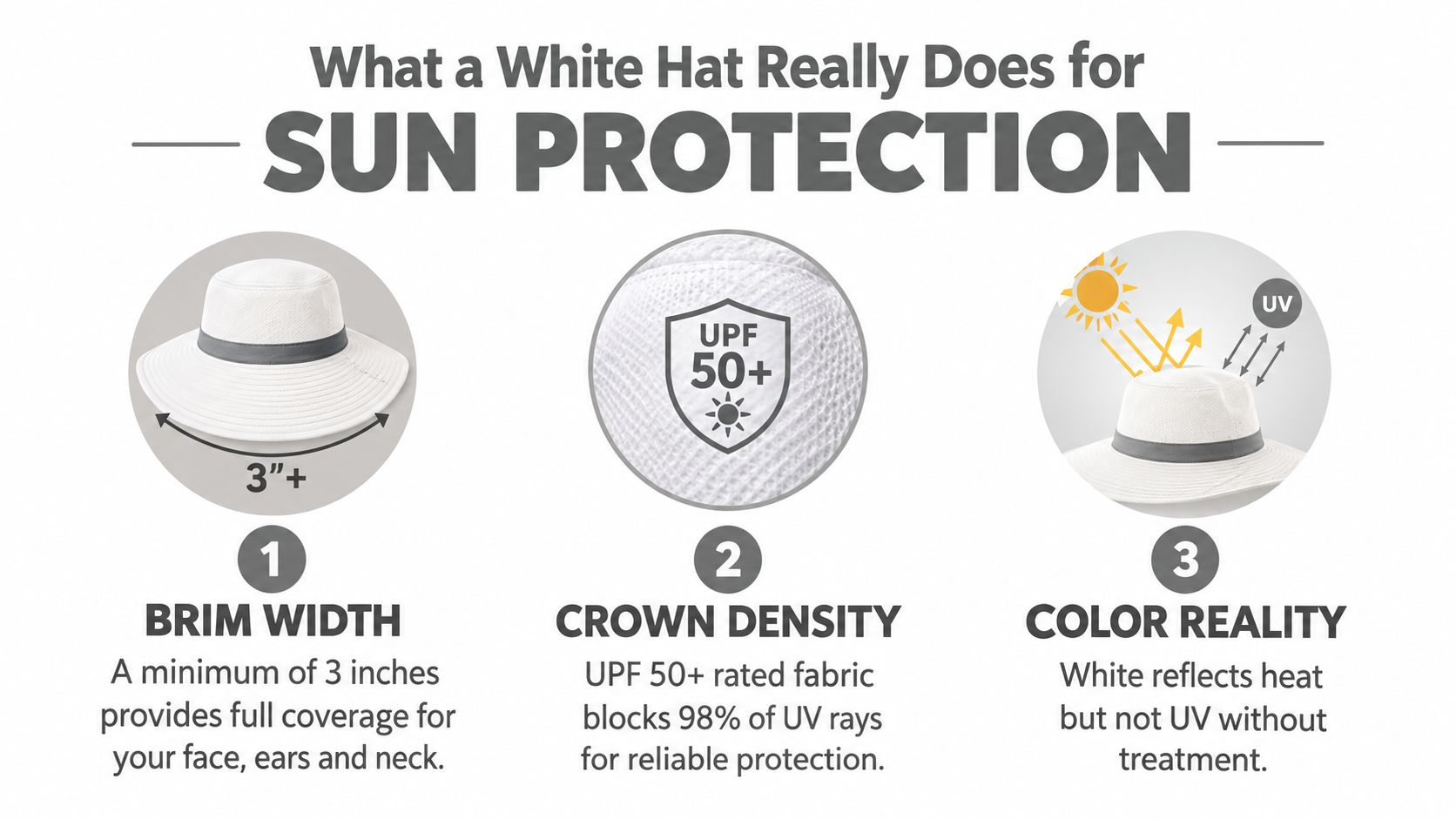
What a White Hat Really Does for Sun Protection
A white golf hat can reflect more visible light and absorb less solar energy than a dark hat, which may help it feel cooler. That is a comfort advantage, not proof of ultraviolet protection. White fabric can still allow ultraviolet radiation through, especially when it's thin, loose, translucent, perforated, or made with open mesh.
That distinction is easy to miss because “cooling” and “sun protection” sound like the same promise. They aren't. A darker, denser fabric may block more UV at the textile level, while a white hat may reduce heat absorption. Your decision should depend on the construction and the coverage you actually need.
A 2025 study of 671 golf-apparel products found that only 7.1% to 16.7% displayed UPF labeling, while just 19% of golf hats had a wide brim with extended coverage of vulnerable areas according to the published golf-apparel sun-protection research. Those findings make one point very clear: don't assume a golf-specific label means a product has been tested for meaningful UV defense.
Use this buying checklist
- Look for documented UPF testing. If the product claims UV protection, check whether it provides a specific UPF rating and testing information. Marketing language without a rating tells you little.
- Inspect the brim. A standard curved bill shades the eyes and part of the face. A wider or extended brim can cover more of the cheeks, ears, and neck, depending on how the hat sits.
- Examine the crown against light. Hold the fabric near a bright window or store light. If you can clearly see through it, expect less fabric-level coverage.
- Check vulnerable areas. The ears, hairline, sides of the face, and back of the neck are easy to overlook. A hat that protects only the forehead is doing a partial job.
- Balance ventilation with coverage. Mesh can improve comfort, but extensive perforation reduces the amount of material between your skin and the sun. Choose airflow that doesn't defeat the reason you're wearing the hat.
For a clearer explanation of conditions that make sun exposure more demanding, this high UV index definition explained is a useful reference. Pair the hat with sunscreen on exposed skin, sunglasses, and clothing that covers the areas your brim can't reach. A hat is part of a sun routine, not a substitute for one.
You can also compare practical features in this guide to the best golf hats for sun protection, but keep the same standard: verify the construction rather than trusting the color.
On-Course and Off-Course Styling
A white golf hat earns its keep because it plays nicely with almost everything. It can sharpen a traditional outfit, soften a dark one, or make an all-white look feel intentional rather than accidental.
Scenario one on the course
Start with a navy polo, light khaki trousers, and clean white shoes. Add a white golf hat with a curved brim and a modest logo, then repeat the white in your belt or glove detail. The result looks classic without drifting into country-club costume.
For a more modern approach, wear a white polo with white or stone-colored bottoms and add one contrasting element, such as a navy belt or dark sunglasses. The hat becomes part of a clean color block instead of a random accessory. Keep the crown simple if the outfit already has technical panels, bold shoes, or a loud bag.
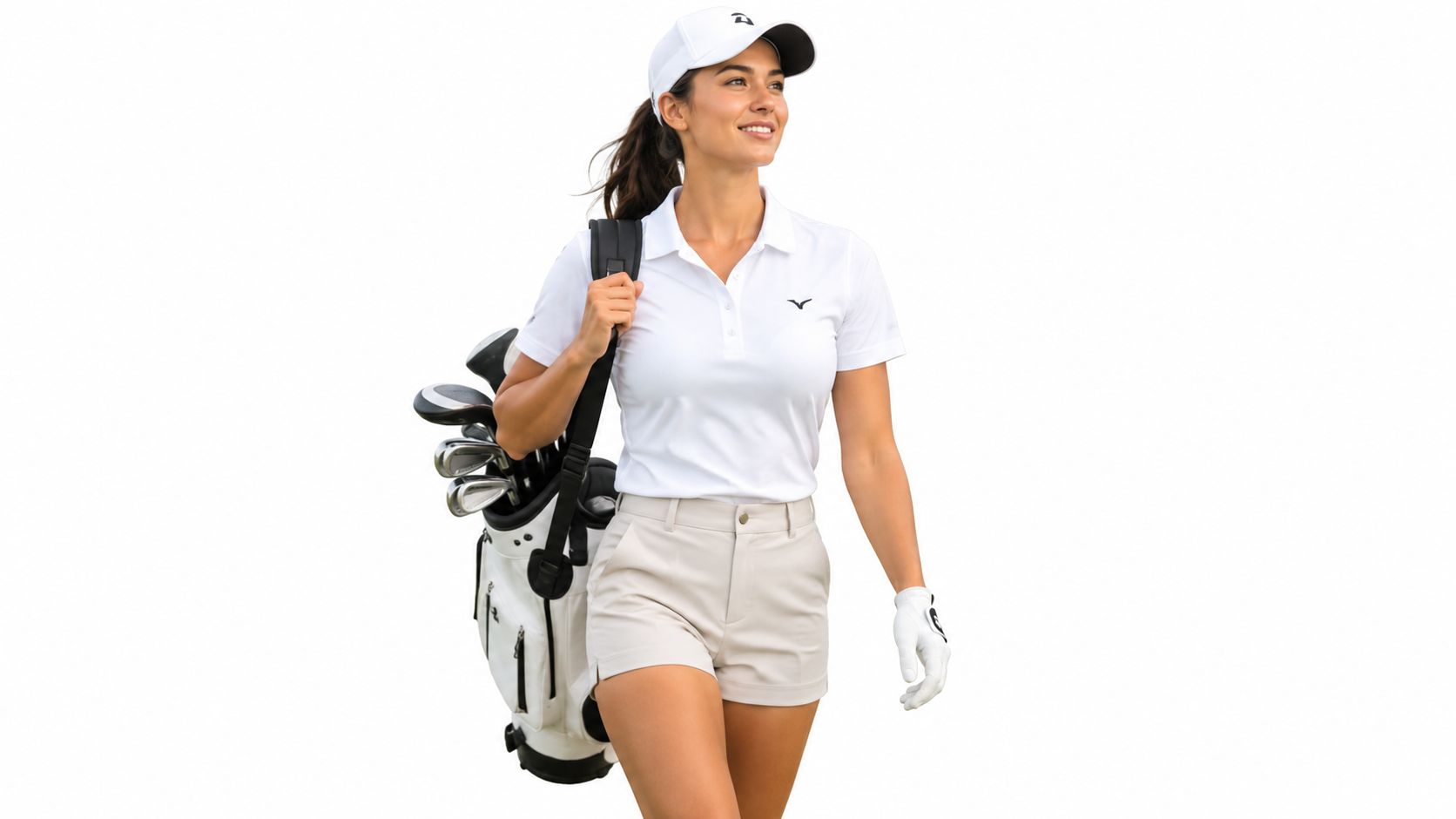
A golfer wearing a white hat with a sleeveless polo and a coordinated bag can look polished without appearing over-styled. The trick is repetition. Pick one or two white details elsewhere, then let the hat do its job.
Scenario two at the 19th hole
After the round, swap the polo for a heavyweight tee and keep the same hat with dark denim or relaxed chinos. A slightly unstructured cap works better here than a rigid performance crown because it feels like lifestyle clothing rather than leftover kit.
For dinner, pair the hat with a button-down, lightweight trousers, and clean trainers. That works best when the hat has minimal branding and a curved brim. If you're heading somewhere more formal, leave it in the car. A golf hat can travel well off the course, but it still needs to respect the room.
Here's a useful visual reference for putting together a flexible golf wardrobe:
For a colder evening, add a lightweight sweater and keep the hat's color as the bright anchor. White works especially well with navy, forest green, gray, denim, and muted earth tones. Just remember that a spotless hat looks deliberate, while a stained one looks like it lost a bet.
Care, Cleaning, and Storage That Extend Hat Life
White hats show sunscreen, sweat, dust, and every questionable cart snack. A lazy care routine turns a crisp cap yellow around the sweatband surprisingly quickly, so build cleaning into the end of the round rather than waiting for a visible disaster.
The quick post-round reset
Start with a dry microfiber cloth to remove loose dust. Then dab the sweatband and any marked panels with a cloth dampened with cool water and a small amount of mild detergent. Don't scrub aggressively. Vigorous rubbing can push sunscreen deeper into the fibers and distort embroidery.
Let the hat air-dry with the crown supported by a clean towel or a rounded object that resembles your head. Keep it away from radiators, hair dryers, and direct window sun. Heat can shrink fabric, weaken adhesives, and flatten a structured crown.
Deal with the ugly marks
Sunscreen stains often need patience more than force. Apply diluted mild detergent to the affected area, allow it to sit briefly, then blot and rinse with cool water. Test the solution on an inconspicuous section first, especially if the hat includes colored stitching or a printed graphic.
For a deeper clean, hand-wash the hat in cool water and support the bill while you work. Avoid twisting the brim. A structured cap can lose its shape in a washing machine, even if the fabric itself survives.
If you're building a broader gear-care routine, these simple ways to clean suede boots illustrate the same useful principle: use gentle cleaning, control moisture, and let the material dry naturally.
Store it like equipment
Don't crush the hat beneath a golf bag or leave it on a hot dashboard. Stack unstructured caps loosely, but give structured caps enough room to keep their front panels upright. A simple hat form, clean towel, or lightly packed interior can preserve the crown between rounds.
Never store a damp hat. Odor and staining become harder to remove once moisture sits in the sweatband. For a repeatable walkthrough, keep this guide to cleaning golf hats handy and make the reset part of your post-round routine.
Smart Buying and Common Questions
The fastest way to choose a white golf hat is to make the decisions in the right order. Fit comes first, fabric comes second, and sun construction comes before style details. A beautiful cap that slips during your swing or leaves the crown translucent isn't a smart purchase.
Use this quick filter:
- Fit: It should stay secure without pressure at your temples or forehead.
- Fabric: Choose cotton for a soft casual feel, polyester for active use, or a blend for everyday versatility.
- Coverage: Inspect the brim, crown density, and areas around the ears and neck.
- Ventilation: Favor airflow that doesn't turn the crown into open mesh.
- Style: Pick a shape that works with your golf clothes and your off-course wardrobe.
A white golf hat from 2ndShotMVP is one option for golfers who want golf-themed headwear and lifestyle designs that work on and off the course. The important part is still the same: check the fit and construction before you buy.
Common questions
How should a white golf hat fit?
It should sit securely without leaving a deep mark across your forehead. The brim should stay stable while you walk and swing, and the crown shouldn't press into your sunglasses.
Is a white golf hat acceptable at most courses?
Usually, a clean, conventional cap fits standard golf style. Traditional clubs may have specific dress rules, so check the course policy before playing somewhere unfamiliar.
Is a visor better for sun protection?
A visor can improve airflow, but it leaves the top of your head uncovered. For broader coverage, choose a cap with a dense crown and a brim that shades more than the eyes alone.
How can you prevent sweat stains?
Choose a washable sweatband, wipe the hat after each round, and let it dry fully before storing it. Sunscreen applied carefully to exposed skin also helps prevent heavy transfer onto the band.
The best white golf hat isn't the brightest cap on the rack. It has a secure fit, a fabric suited to your climate, coverage that matches your exposure, and a style you'll wear.
Visit 2ndShotMVP to explore golf hats, beanies, and lifestyle apparel built around the game. Pick a white design that fits your on-course style, then wear it with the confidence that comes from choosing the construction and care routine deliberately.


![300 Yd Bombers Club - Fun MVP - WhiteFun Hat [FlexFit]300 Yd Bombers Club - Fun MVP - White](http://store.2ndshotmvp.com/cdn/shop/files/closed-back-structured-cap-white-front-67005555ae157.jpg?v=1747428788&width=480)
![300 Yd Bombers Club - Fun MVP - WhiteFun Hat [FlexFit]300 Yd Bombers Club - Fun MVP - White](http://store.2ndshotmvp.com/cdn/shop/files/closed-back-structured-cap-white-back-67005555b0682.jpg?v=1747428789&width=480)
![72 - Fun MVPFun Hat [FlexFit]72 - Fun MVP](http://store.2ndshotmvp.com/cdn/shop/files/closed-back-structured-cap-multicam-black-front-666a5fa015432.png?v=1747448488&width=480)
![72 - Fun MVPFun Hat [FlexFit]72 - Fun MVP](http://store.2ndshotmvp.com/cdn/shop/files/closed-back-structured-cap-multicam-black-back-666a5fa017c12.png?v=1747448489&width=480)