

You're on the eighth hole, the sun has disappeared behind cloud, and the breeze that felt refreshing on the first tee now cuts straight through your sweatshirt. You've started damp, stopped sweating, and somehow you're both chilly and clammy. Worse, every turn of your shoulders feels like a negotiation with the fabric.
That's the problem with treating women's golf sweatshirts as cute extras. The right layer is performance equipment with a personality. It has to manage moisture, leave room for a full swing, hold warmth between shots, and still look appropriate when you walk into the clubhouse. The U.S. women's golf audience is expanding across committed players, juniors, beginners, off-course participants, and people who want golf clothing they can wear elsewhere. The National Golf Foundation reported that women represented 28% of all U.S. on-course golfers in 2024, with the total number approaching 8 million, while 1.284 million female junior golfers played that year. Golf Digest's coverage of the National Golf Foundation data shows why this category deserves better than scaled-down men's gear and decorative logos.
Eight Holes In and You Can Still Feel the Breeze
A useful golf sweatshirt solves four decisions before you ever debate color.
Start with the fabric family
Cotton fleece feels excellent in the pro shop. It's soft, familiar, and warm at first contact. On a walking round, though, it can absorb perspiration and dry slowly, leaving you colder when you stop moving. Technical polyester, merino blends, and open French terry usually handle changing effort better because they can move vapor away from the body instead of holding it against the skin.
Match the weight to your round
A heavy sweatshirt makes sense for a cart round in dry, cold weather. It's a poor default for a walking golfer who warms up after the first few holes. Midweight is the sweet spot for most players, especially when the sweatshirt sits over a polo and under a vest or wind shell.
Choose the fit intent
A relaxed fit gives you room for a base layer and usually feels less restrictive across the upper back. An athletic fit sits neatly under outerwear but must provide enough shoulder ease for rotation. Cropped shapes can work with high-rise bottoms, but check that the hem doesn't rise above your belt line at the top of the backswing.
Put it in a layering system
A sweatshirt shouldn't have to do every job. A breathable base layer manages skin contact, the sweatshirt traps useful warmth, and an outer shell handles wind or rain. That system works better than one dense pullover that tries to be insulation, moisture barrier, and weather protection at once.
Playing rule: Buy the sweatshirt for the coldest part of your active round, not for the parking lot before you've swung a club.
A competitive player may prioritize low-bulk performance fabric. A casual golfer may want a softer hybrid that works for travel and coffee afterward. A lifestyle buyer may never play a full round, but she still deserves sleeves and seams that don't fight movement. The best women's golf sweatshirt serves the way you use it.
Fabric Families That Actually Matter on the Course
Fabric names tell only half the story. Construction, thickness, openness, and the rest of your layers determine whether a sweatshirt feels pleasantly warm or turns into a damp blanket by the turn.
A peer-reviewed sports-textile study found that water-vapor permeability increases as fabric thickness decreases and fabric openness increases. Its multilayer testing also found a strong relationship between the vapor resistance of the combined garment and the resistance of its individual layers, with adjusted R² = 0.799 and p = 0.002. The textile study explains the relationship between fabric construction and vapor resistance.
Golf sweatshirt fabric families compared
| Fabric | Warmth | Breathability | Drying Time | Best For |
|---|---|---|---|---|
| Cotton fleece | High at rest | Low to moderate | Slow | Cart rounds, clubhouse wear, dry cold |
| Merino blend | Moderate to high | High | Moderate | Variable temperatures, long wear, travel |
| Technical polyester | Moderate | High when knit openly | Fast | Walking, practice, active rounds |
| Lightweight French terry | Moderate | Moderate to high | Moderate to fast | Layering, mild cold, hybrid use |
Cotton fleece
Cotton fleece wins on hand-feel and immediate coziness. The brushed interior traps air, which feels great at the first tee, but that same dense surface can hold moisture close to your skin after a brisk walk. Choose it when warmth and softness matter more than rapid drying, and avoid pairing a thick cotton fleece with a waterproof shell unless conditions demand it.
Merino blends
Merino brings natural temperature buffering and a comfortable next-to-skin feel, especially in a blend that improves durability and drying. It's a strong choice for travel and long days because it doesn't feel as purely athletic as shiny technical fabric. The trade-off is care. Follow the label, because rough washing and high heat can damage fit and surface texture.
Technical polyester
Polyester-rich constructions are the practical choice for players who walk, carry, or run warm. The material can reduce drying time, and a breathable knit keeps the sweatshirt from feeling sealed shut during the swing. Look for a matte face and clean structure if you want it to transition beyond the course.
Lightweight French terry
French terry sits between sweatshirt comfort and active-layer function. Its looped interior is less dense than fleece, so it generally vents better while still offering enough warmth for a cool morning. It's my favorite category for a versatile mid-layer, provided the cut includes stretch through the shoulders and the hem stays put.
My ranking: Walk and carry, choose breathable polyester or a merino blend. Ride and run cold, choose fleece or a warmer merino construction. Want one sweatshirt for golf and travel, choose lightweight French terry.
Read the specification, not just the product name. Fiber blend, fabric weight, knit structure, and moisture-management testing tell you more than “cozy,” “premium,” or “all-season.” A soft sweatshirt that dries poorly can still be the wrong piece for an active round.
Fit That Respects the Swing Instead of Fighting It
Women's golf sweatshirts shouldn't be men's pullovers reduced through the wash. Female athletic-garment research found that a purpose-designed performance top delivered higher fit satisfaction and more optimal scapular positioning during overhead movement than a control garment, even though comfort and mobility scores weren't significantly different. The study on female athletic-garment design and movement supports a simple conclusion: the pattern matters.
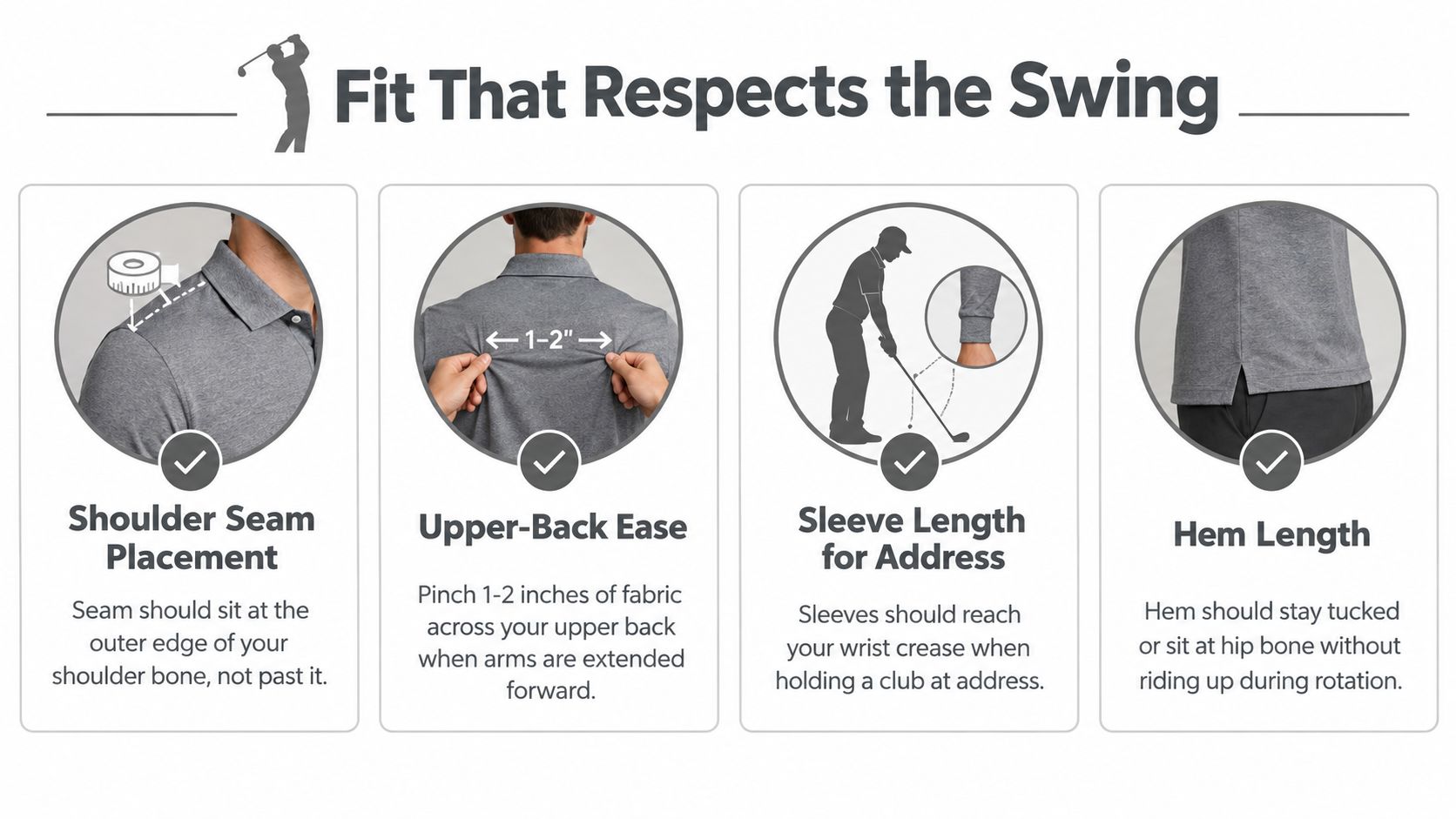
Check the upper body first
The shoulder seam should sit near the outer edge of your shoulder bone. If it drops down the arm, the sweatshirt will usually pull across your upper back when you extend your arms. If it sits too far inward, you may feel tension before you even reach the top of the backswing.
You need upper-back ease, not excess fabric everywhere. Reach forward as if you're addressing the ball. The material should move with you without pulling the collar backward or lifting the hem dramatically. Articulated sleeves and low-bulk shoulder seams are useful details, especially under a vest.
Use the fitting-room checklist
- Bust: The fabric should skim without stretching across the fullest point. A tight chest panel can make the shoulders feel restricted even when the sleeves fit.
- Shoulders: The seam should align with the shoulder bone edge, not droop toward the upper arm.
- Sleeves: With your hands on a club at address, the cuff should reach the wrist area without sliding toward the forearm.
- Torso: The hem should cover the waistband of a tucked polo or sit cleanly at the hip when worn untucked.
A sharply tapered waist often looks polished on a hanger but becomes irritating through rotation. A slightly relaxed torso with a shaped shoulder usually performs better. Don't confuse “women's fit” with “tight everywhere.”
Stretch recovery matters as much as stretch itself. A sweatshirt that stretches across your back but stays distorted afterward will look sloppy and offer less support on the next round. Look for a fabric that gives during external shoulder rotation and returns to shape when your arms come down. If you're comparing supportive equipment for an irritated arm or elbow, a resource such as this guide to an elbow brace for golf swing can help separate garment comfort from injury support.
Performance Pullovers, Lifestyle Pullovers, and the Space Between
Not every golfer needs a technical quarter-zip covered in performance language. Not every attractive sweatshirt belongs on a course. Sort the category by your real week, not by the model's pose in a catalog.
| Sweatshirt type | What it prioritizes | Best match | Main compromise |
|---|---|---|---|
| Performance pullover | Moisture movement, stretch, low bulk | Competitive amateur, frequent walker | Can look more athletic off the course |
| Lifestyle pullover | Hand-feel, structure, logo, casual styling | Social member, travel wearer | May dry slowly during active play |
| Hybrid pullover | Technical comfort with refined styling | Golfer who plays and socializes | Rarely the absolute best at one single task |
The performance pullover
Choose this for early tee times, practice sessions, and rounds where you'll walk. It should disappear under a vest, keep the sleeves from bunching, and feel comfortable when you're repeatedly moving from address to follow-through. A matte technical knit, quarter-zip collar, and shaped hem usually make it more useful than a bulky hoodie.
The lifestyle pullover
This is the cart-path, clubhouse, travel-day option. It can have a softer cotton face, a more generous silhouette, or a prominent logo. It's excellent when you're prioritizing comfort at rest, but don't mistake softness for moisture control. If you tend to sweat during the walk between shots, this is better as an outer layer over a lighter technical top.
The hybrid
The hybrid is the smart middle ground. It might use a technical blend with a cleaner surface, a refined collar, and enough structure for dinner after the round. The best examples don't scream “gym layer,” yet they still move when you swing. For a useful look at women's performance apparel and design choices, Golf Problems' discussion of the G Le4 family offers relevant context.
Price should follow use. Spend more where you'll demand repeated washing, reliable recovery, and course-specific movement. Spend less when the sweatshirt's main job is to keep you comfortable in the clubhouse or on the road. For broader lifestyle options, browse fresh-from-the-fairway styles, but keep the same test in mind: will the piece still behave when you swing?
Layering Systems for Early Tee Times and Cold Practice Days
The sweatshirt works best as the middle of a system. Your base layer controls skin comfort, the mid-layer stores warmth, and the outer layer blocks whatever the weather is throwing sideways.
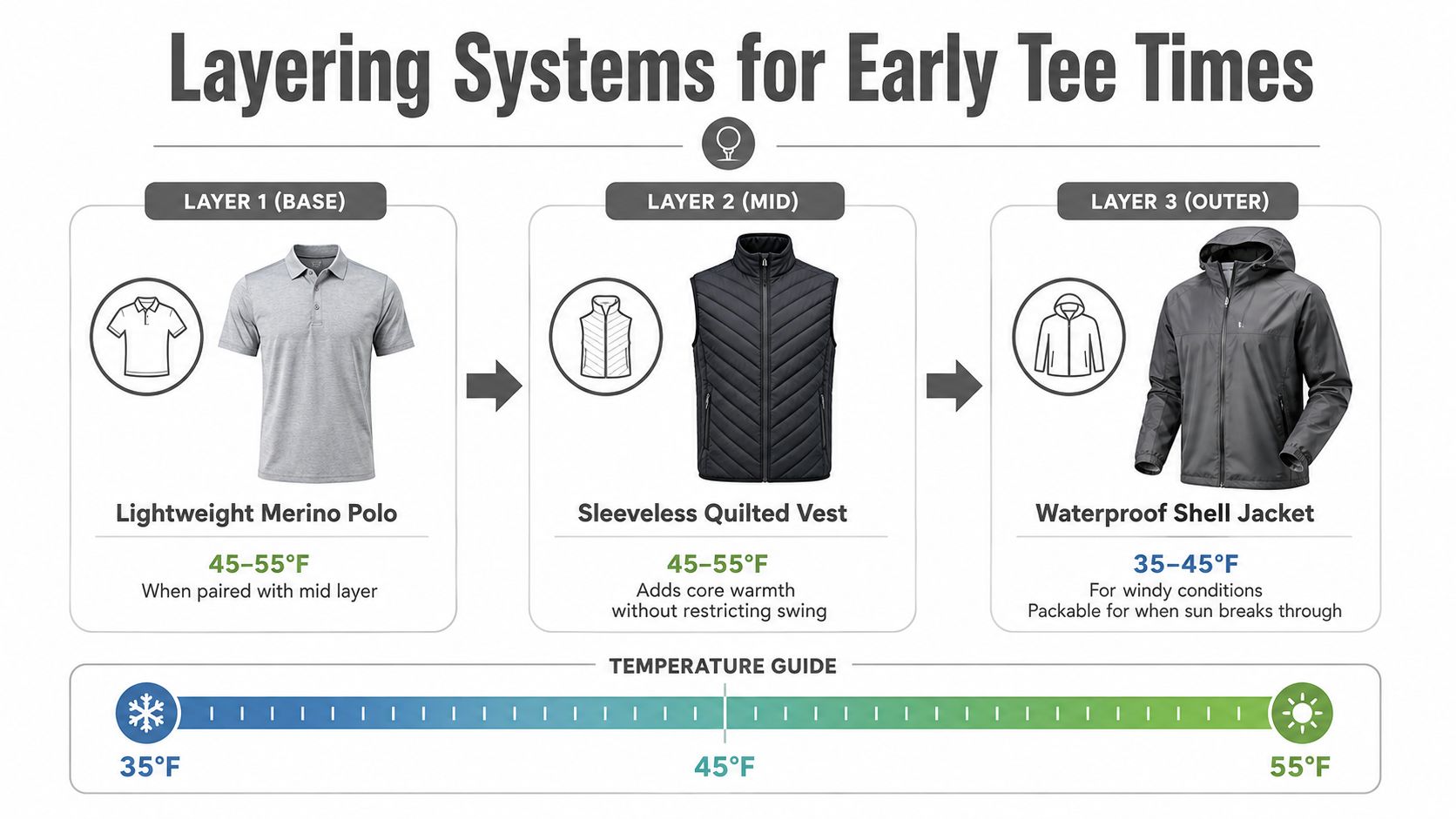
For cool but manageable mornings
In the high 40s to mid 50s Fahrenheit, start with a lightweight merino or technical polo and add a breathable sweatshirt. If your arms run warm, put a sleeveless quilted vest over the sweatshirt. That keeps insulation around the core while leaving the shoulders available for the swing.
For a walking golfer, use a moisture-managing polo under lightweight French terry or polyester. For a cart golfer, cotton fleece can work if the air is dry and you don't tend to sweat. At the practice facility, choose the lighter combination because repeated range swings generate heat faster than a round with pauses.
For milder conditions
In the mid 50s to mid 60s Fahrenheit, a technical sweatshirt over a polo may be enough. Choose a quarter-zip if you want to vent quickly, or a crew neck if you prefer a stable collar and cleaner off-course styling. The key is to avoid a dense inner face that traps vapor during walking.
On a windy, overcast day, add a wind shell over the breathable mid-layer. The shell should block air without turning your sweatshirt into a sealed chamber. The most common layering mistake is wearing a waterproof shell directly over thick, non-breathable fleece. You may feel protected at the first tee, then clammy by the middle of the round.
Packing rule: Carry the shell separately until you need it. A compact layer is more useful in the bag than a bulky jacket you refuse to wear.
For travel and active days around the course, practical packing advice such as how to pack smarter with HYDAWAY helps keep weather layers accessible instead of buried beneath shoes and spare gloves. For a small warmth backup, see the beanie collection, especially when a cold practice session starts before the sun has done any work.
Styling From the Range to the 19th Hole
Take one neutral sweatshirt, preferably oatmeal, charcoal, or navy, and give it three jobs. That's how you get value from women's golf sweatshirts instead of accumulating a closet of one-purpose layers.
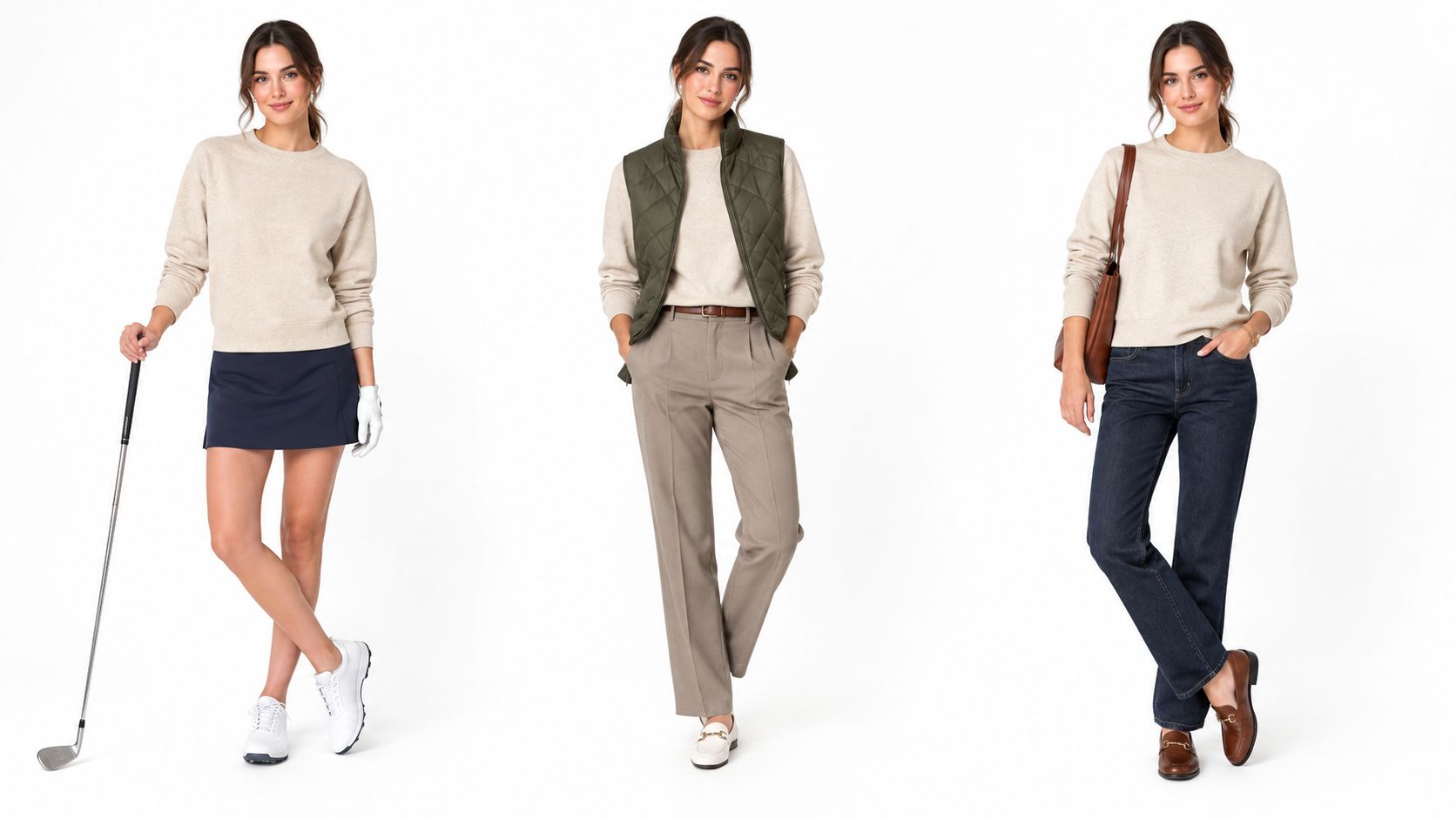
Range day
Wear a hip-length or slightly cropped sweatshirt with high-rise leggings or a technical skort and turf shoes. A front tuck works if the hem is flexible and the waistband is flat. Keep jewelry minimal, perhaps small hoops or a simple watch, so nothing catches when you rotate.
An oversized sweatshirt can look relaxed over fitted bottoms, but check the sleeve cuff. If it drops over your hand, it can interfere with a glove, grip, or range-ball routine. A ribbed cuff that stays above the wrist is a small detail with a major practical payoff.
Member-guest and clubhouse
Put the same sweatshirt under a quilted vest with slim-fit trousers. A hip-length cut usually works better than a cropped shape here because it creates a cleaner line over mid-rise or traditional-rise pants. Tuck only if the fabric is thin enough to lie flat. Otherwise, wear it untucked with an even hem and let the vest provide structure.
A mock neck changes the jewelry equation. Skip a long pendant and choose small earrings or a watch. With a crew neck, a short chain can sit neatly above the collar without competing with the knit.
Give the outfit a place to go after golf by browsing cart-ready women's styles that can handle a casual clubhouse without looking like a uniform.
Weekend errands
Pair the sweatshirt with straight-leg denim and loafers. An oversized silhouette works with slimmer jeans, while a fitted hip-length sweatshirt looks sharper with relaxed denim. Keep the styling intentional: clean sneakers or loafers, a structured crossbody, and one metal finish in your jewelry.
Golf and workwear increasingly overlap, so 19th-hole versatility isn't a bonus anymore. It's a sensible buying standard. The sweatshirt you can wear to lunch, travel, or a casual office day will earn far more use than the one that only looks right beside a golf bag.
The Warmest Sweatshirt Is Not Always the Best Golf Sweatshirt
A heavy fleece can cost you comfort after it gives you warmth. The thick fabric may restrict your shoulder turn, absorb perspiration during the walk, and leave you colder once you stop beside the green. That's especially frustrating when the sweatshirt felt perfect in the parking lot.
The better target is stable comfort across the entire round. You want enough insulation for the first tee, enough ventilation for the walk, and enough mobility for a repeatable swing. A lighter breathable layer over a moisture-managing polo often beats a thick hoodie because it gives you more ways to regulate temperature.
Use the five-swing test
Before buying, make five full practice swings. Don't perform half-speed showroom swings. Reach the top, rotate through, and hold the finish.
- Shoulders: No pulling across the upper back.
- Sleeves: Cuffs stay clear of the hands and glove.
- Hem: It doesn't climb sharply above the waistband.
- Collar: It doesn't press into the throat or drag backward.
- Recovery: The fabric returns to shape after the movement.
If the sweatshirt fails any of those tests while you're dry and fresh, it won't improve after a damp walk and several hours of wear. The warmest piece in your closet isn't automatically the smartest piece in your golf bag.
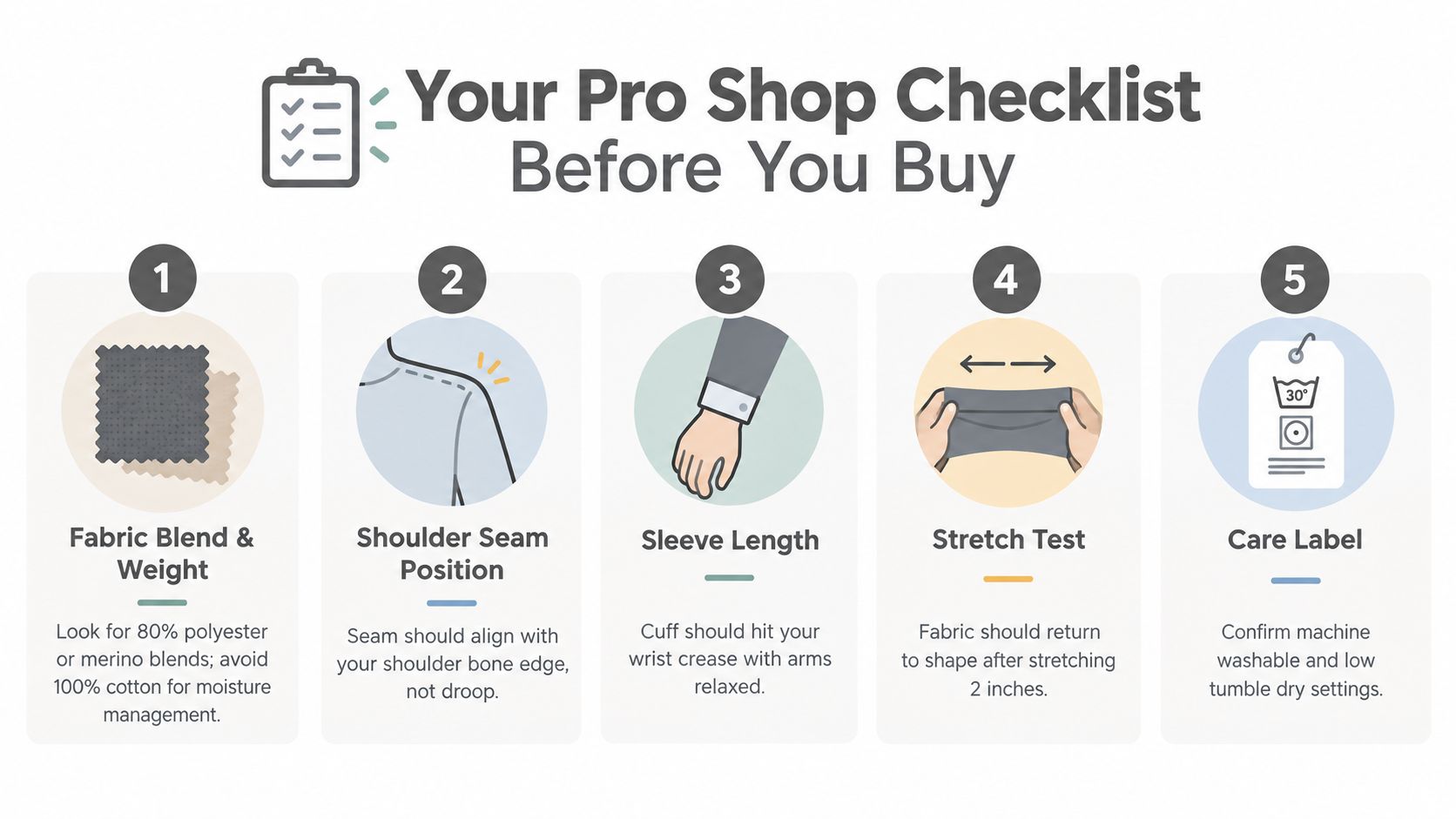
Your Pro Shop Checklist Before You Buy
Pull this up before you tap “add to cart.” A good sweatshirt should pass every test, not merely look good in a product photo.
- Fabric blend and weight: Identify the fibers and choose based on how you play. Polyester or merino blends generally make more sense for active rounds than dense cotton alone.
- Shoulder seam position: Put the sweatshirt on and check that the seam meets the outer edge of your shoulder bone. A drooping seam usually means trouble through the turn.
- Sleeve length: Hold a club at address. The cuff should reach the wrist area without sliding over your hand.
- Five-swing mobility test: Rotate fully and check the shoulders, hem, collar, and stretch recovery. If you feel resistance in the fitting room, you'll feel it more on the course.
- Care instructions: Check whether washing or drying could shrink the garment enough to change the fit. A sweatshirt that needs delicate care isn't automatically bad, but you should know the maintenance before buying.
- 19th-hole test: Ask whether you'd wear it with regular trousers, denim, or travel clothes. If the answer is no, it may be too specialized for your wardrobe.
The strongest purchase usually isn't the thickest, trendiest, or most heavily branded. It's the sweatshirt you'll grab for cool rounds, range sessions, travel days, and clubhouse plans because it fits your swing and your life. Spend five minutes trying it on instead of one minute checking out.
2ndShotMVP offers premium golf hats, beanies, and lifestyle apparel with fun designs made for confidence on and off the course. Pair one of its versatile pieces with the sweatshirt that earned a place in your golf bag, then visit 2ndShotMVP to find your next 19th-hole favorite.


![300 Yd Bombers Club - Fun MVP - WhiteFun Hat [FlexFit]300 Yd Bombers Club - Fun MVP - White](http://store.2ndshotmvp.com/cdn/shop/files/closed-back-structured-cap-white-front-67005555ae157.jpg?v=1747428788&width=480)
![300 Yd Bombers Club - Fun MVP - WhiteFun Hat [FlexFit]300 Yd Bombers Club - Fun MVP - White](http://store.2ndshotmvp.com/cdn/shop/files/closed-back-structured-cap-white-back-67005555b0682.jpg?v=1747428789&width=480)
![72 - Fun MVPFun Hat [FlexFit]72 - Fun MVP](http://store.2ndshotmvp.com/cdn/shop/files/closed-back-structured-cap-multicam-black-front-666a5fa015432.png?v=1747448488&width=480)
![72 - Fun MVPFun Hat [FlexFit]72 - Fun MVP](http://store.2ndshotmvp.com/cdn/shop/files/closed-back-structured-cap-multicam-black-back-666a5fa017c12.png?v=1747448489&width=480)