

You arrive before the clubhouse has properly warmed up. The fairways are silver with frost, your fingers feel clumsy around the coffee cup, and the first tee is already asking for a full swing. A thin cap might look tidy, but it won't stop the wind reaching your ears. A heavy hat may keep you warm, yet turn your head into a sweaty, distracting sauna by the fifth hole.
That is the actual challenge when comparing golf beanies for sale. The right one must retain warmth, release moisture, stay put through the swing, and look appropriate when you walk into the clubhouse afterward. It is golf equipment with a clothing brief, not just winter merchandise.
Why Golf Beanies Matter More Than You Think
Cold changes the experience of a round before it changes the scorecard. Your ears ache on the first tee, your neck tightens, and the small discomforts compete for attention while you're trying to control tempo. A beanie won't solve every winter-playing problem, but it can remove one persistent distraction without restricting your movement.
A close-fitting cap is particularly useful during early starts, exposed courses, breezy practice sessions, and the walk between the clubhouse and first tee. It also packs easily into a golf bag, unlike bulkier winter accessories. The best designs feel present during the warm-up and almost disappear once play begins.
Practical rule: Warmth helps performance only when the hat stays comfortable throughout the round.
The audience for golf headwear is broader than tournament professionals and private-club regulars. The R&A's 2024 Global Participation Report recorded 108 million adults and juniors playing some form of golf across its affiliated markets, excluding the United States and Mexico. That total represented an increase of almost 3 million participants compared with the previous year, showing why practical golf apparel serves a wide recreational market as well as a performance-focused one.
The same report counted 64.1 million adult players and 43.9 million juniors, while traditional nine- and 18-hole golf attracted 43.3 million adults and juniors. Women accounted for 31% of adult participation in the R&A's nine largest markets, and Asia was the largest adult-participation region with 26.2 million golfers, followed by Europe with 20.3 million and Canada with 6.9 million. Those figures point to a customer base that includes different ages, genders, climates, playing formats, and style preferences.
Golf beanies also benefit from a design that has proved remarkably adaptable. Historical accounts trace beanie-style caps to 15th-century Britain, when knitting was spreading in Britain, although early examples were more likely woven on a loom. The history of the beanie) explains why the form has travelled so easily across workwear, collegiate clothing, outdoor gear, and sport.
That versatility matters for golf merchandise. A well-designed beanie can move from a cold round to the 19th hole, a commute, or a weekend walk. Brands planning a broader apparel range can also learn from resources on sourcing heirloom-quality club goods, particularly when they want merchandise to feel considered rather than disposable.
Understanding Fabric Science and Thermal Comfort
The label “winter weight” doesn't tell you enough. Two beanies can feel equally warm in a shop and behave very differently after several holes of walking, a windy approach, and repeated movement between indoor and outdoor spaces.
Research on knitted sportswear links fabric thickness with heat resistance and porosity with breathability. A thicker fabric generally holds more heat, but a dense knit can also slow the escape of water vapour. For golf, that trade-off matters because the player may alternate between standing still, walking uphill, practising, and taking a full swing in changing wind.
A 2×2 rib structure produced favorable thermoregulation, breathability, and thermophysiological comfort in the cited research on knitted sportswear. Rib knitting also offers useful stretch, which helps a beanie conform to the head without needing excessive compression. Dense plain knits and double-knit constructions can suit very cold, stationary use, but they may feel too warm during an active round.
| Property | Effect on Comfort | Best For |
|---|---|---|
| Thickness | Improves insulation but may slow heat and vapour release | Cold, exposed rounds where warmth is the priority |
| Porosity | Allows more airflow and can reduce trapped sweat | Walking rounds and active practice |
| 2×2 rib structure | Balances stretch, breathability, and thermal comfort | General-purpose golf use |
| Fabric mass | Adds body and heat resistance, with a possible breathability penalty | Windy conditions and lower-activity wear |
| Air permeability | Indicates how readily air passes through the knit | Comparing similar-looking beanies |
| Moisture-vapour transmission | Helps indicate whether perspiration can escape | Longer rounds and indoor-to-outdoor transitions |
A useful buyer's habit is to compare construction details instead of trusting broad marketing language. Ask whether the product information identifies knit structure, thickness, air permeability, drying behaviour, or moisture-vapour transmission. “Moisture-wicking” is incomplete unless the brand explains how the fabric moves and releases moisture.
Matching insulation to movement
The warmest hat isn't automatically the most effective golf hat. Excessive insulation can create dampness under the crown, and damp fabric may feel colder once wind reaches it. A moderately thick, elastic rib knit often makes more sense for a walking round than an extremely dense cap designed for standing outdoors.
The same principle applies to the rest of your winter kit. If you're comparing headwear with other cold-weather accessories, a practical guide to warmth for cold lower legs offers a useful reminder that insulation works best as part of a balanced system, not as a race toward maximum thickness.
Look for a beanie that holds its shape without squeezing the temples, covers the ears when wind protection matters, and leaves enough flexibility for a hood or jacket collar. The goal is steady comfort from the first tee through the final green.
Material Choices and Moisture Management
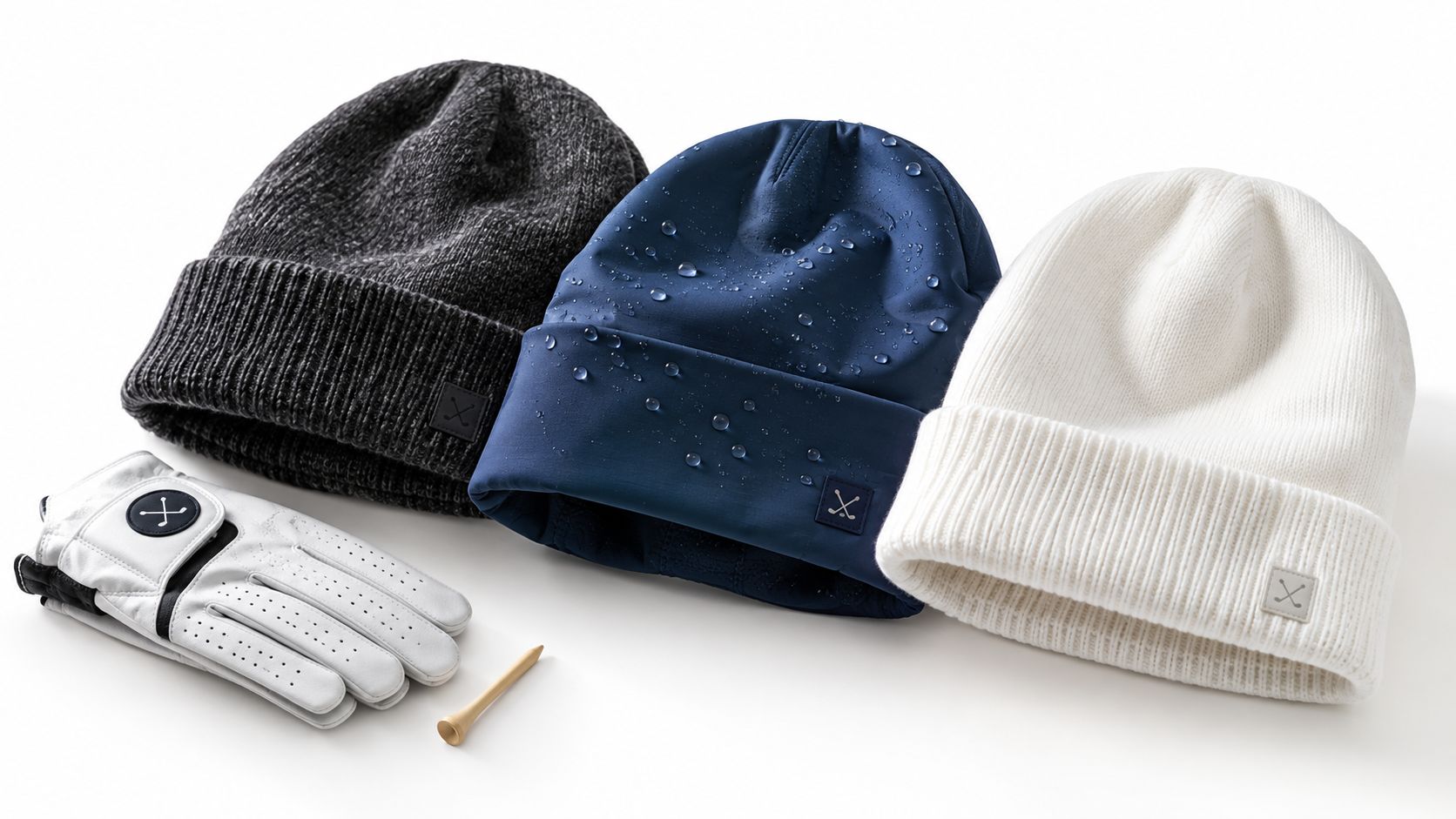
Fiber choice affects what happens after your body warms up. Merino wool, synthetic blends, and cotton can all make a comfortable beanie, but they handle moisture and temperature changes differently.
Merino wool offers strong thermal insulation and moisture absorption, which makes it well suited to conditions that shift during a round. It can feel warm without requiring an especially bulky construction. Its limitation is that care requirements and drying behaviour may differ from those of a synthetic option, so buyers should read the garment instructions rather than assume all wool products behave alike.
Synthetic blends are often chosen for quick drying, durability, and predictable stretch recovery. They can be a sensible choice for golfers who practise frequently, play in damp conditions, or want a hat that can dry between outings. A synthetic cap still needs a good knit structure. Fiber alone won't compensate for poor airflow or an overly tight fit.
Cotton can feel soft and familiar, but it tends to hold moisture. Once damp, it may feel cool against the scalp, which is a poor combination on a windy course. It can work for casual clubhouse wear, but it isn't my first choice for an active cold-weather round.
Read beyond the fiber label
Research on textile comfort identifies fiber type, moisture regain, knitted structure, thermal conductivity, drying time, and water-vapour transmission as connected influences on how a fabric feels. Yarn linear density, fiber hairiness, and fabric mass also affect heat resistance and airflow. That means “merino” or “acrylic” is only the beginning of the evaluation.
For a closer look at construction, compare the product information in this guide to the moisture-wicking beanie collection. A useful product description should tell you more than the color and slogan. It should help you understand whether the hat is intended for active wear, casual layering, or both.
Multilayer knitted sports fabrics can improve one-way moisture transport by using surfaces with different wettability. In practical terms, a beanie with a moisture-managing inner surface and an outer surface that supports evaporation may feel less clammy than a uniform fabric of similar thickness. Buyers should treat a moisture claim as credible only when the construction or testing method is explained, much like the distinction described in this guide to a moisture resistant bag.
Beanie Styles and Fit for Every Round
Fit is where many promising golf beanies fail. A cap can be warm, attractive, and well made, but if it creeps upward during the backswing, presses against your temples, or exposes your ears whenever the wind rises, it won't earn regular space in your golf bag.
Start with the cuff. A cuffed beanie usually gives you a defined band around the ears and can add wind protection without relying on a very thick crown. It often works well with a jacket collar. A cuffless style creates a lower-profile outline and may slide more easily beneath a hood, but it needs enough stretch recovery to stay secure.
Choose the shape for the conditions
Use this quick decision guide:
- For exposed, windy courses: Choose reliable ear coverage and a stable lower edge. A moderate cuff can protect the ears without becoming bulky.
- For a hooded jacket: A cuffless or low-profile design may layer more cleanly beneath the hood.
- For active walking rounds: Favor breathable construction and a flexible fit over maximum density.
- For range practice: Pick a hat that manages sweat and won't need constant adjustment between swings.
- For clubhouse-to-course use: Choose a restrained silhouette that doesn't look like technical equipment once the outer layers come off.
The hat should sit securely but not leave a deep pressure mark. Stretch is useful only when the fabric recovers after wear. Excessive tightness can become a quiet source of distraction, especially during a long round, while an oversized crown may shift when you turn your head or lean into the wind.
Check movement before committing
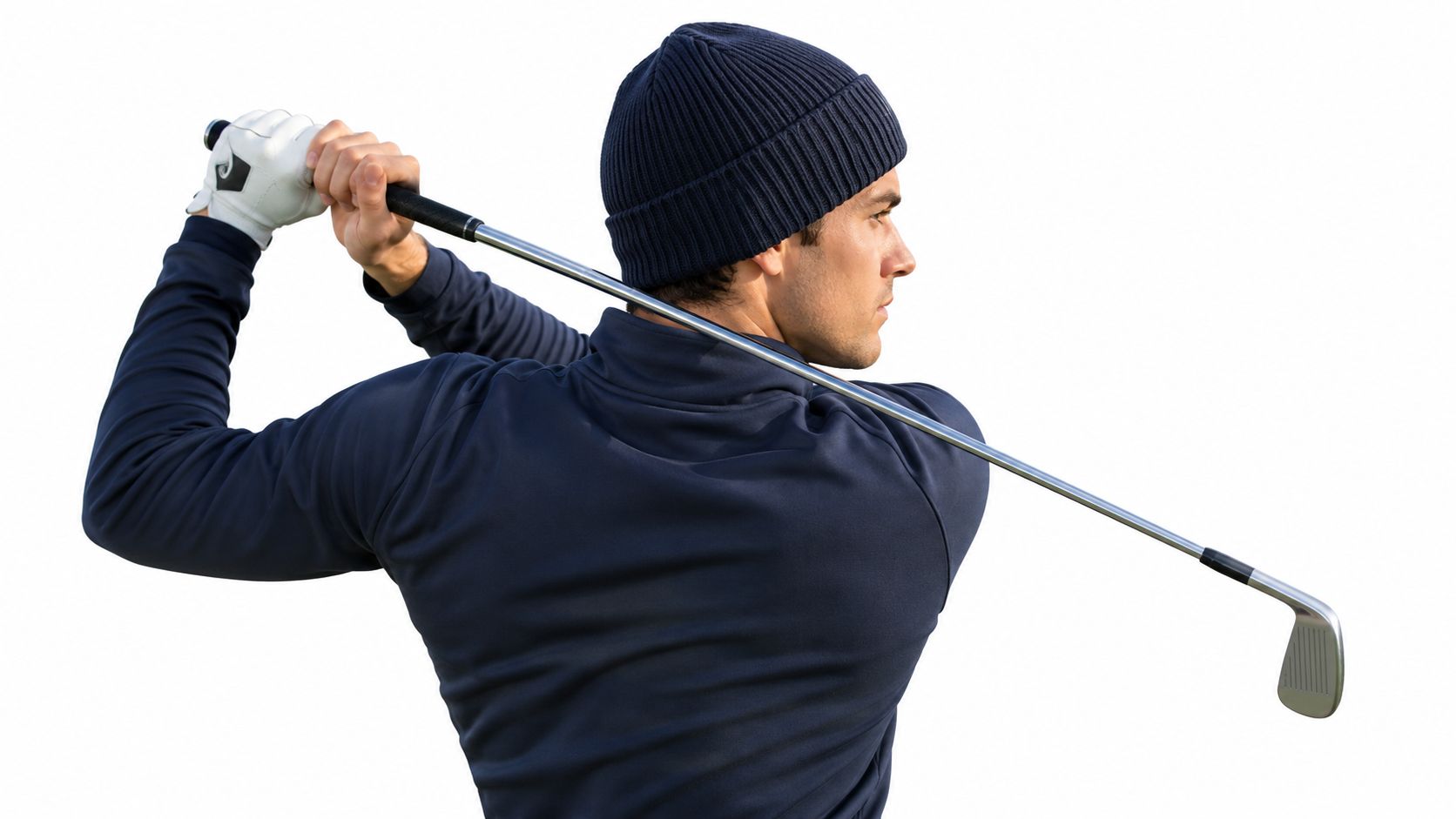
Test the beanie with the clothing you play in. Put on a polo, mid-layer, and jacket if that's your normal winter combination, then rotate your head, raise your arms, and make a slow practice swing. The hat shouldn't interfere with a hood, catch on a collar, or create pressure when your head turns through impact.
Sizing deserves more attention for women golfers and for anyone whose head shape doesn't match a limited unisex pattern. A product such as 2ndShotMVP's guide to the best golf beanies gives shoppers another reference point, but the practical test remains simple: the beanie should stay in place without becoming something you notice every few minutes.
Styling Golf Beanies for On and Off the Course
A golf beanie has to pass two tests. It must function during play, and it must look intentional when you enter the clubhouse or meet friends afterward.
Start with the venue. A private club may expect conservative clothing and subtle branding, while a public course, municipal facility, or practice range may give you more freedom with color and graphics. Dress codes vary, so check the venue's current policy before assuming a knit hat is acceptable. Ridgewood Country Club's 2025 golf rules and policies, for example, requires hats to be worn with the brim forward, which creates potential ambiguity for a brimless knit beanie. The policy doesn't specifically resolve every beanie scenario.
Build the outfit around the hat
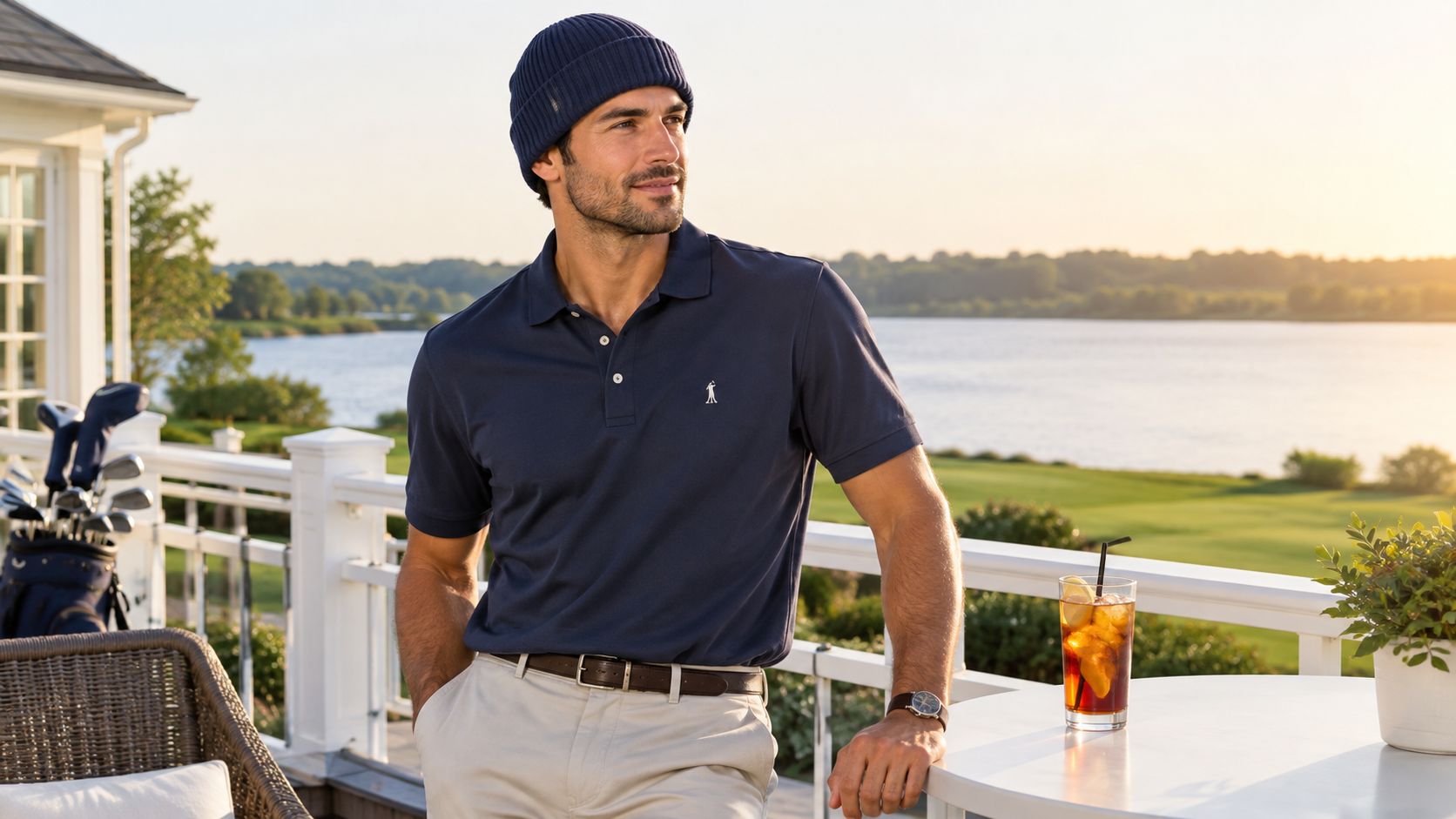
A charcoal or navy beanie pairs easily with a neutral polo, quilted vest, rain shell, or dark trousers. White and cream knits can brighten a cold-weather outfit, but they show mud and grass more readily. Strong patterns and visible logos work best when the rest of the outfit stays quiet.
Use these styling checks before buying:
- Private-club setting: Select a restrained color, compact logo, and clean fold at the cuff.
- Municipal course: A brighter color or playful graphic can express personality without requiring formal coordination.
- Practice facility: Prioritize fit, ear coverage, and moisture handling over conservative styling.
- 19th-hole wear: Choose a silhouette that works without your outer jacket and doesn't look overly technical.
- Travel: Look for a packable knit that recovers its shape after being stored in a golf bag.
A versatile beanie earns more value because you can wear it beyond the course. The category's long history across practical and lifestyle clothing supports that flexibility, but styling still determines whether the hat feels like part of an outfit or a last-minute cold-weather fix.
Care is part of the style
A stretched cuff, flattened crown, or fuzz-covered surface can make a good beanie look tired. Follow the care label, wash gently, and store the hat in a way that preserves its shape. More practical outfit ideas appear in this guide to what to wear with a beanie, especially if you want one hat to cover both golf and casual settings.
Caring for Your Golf Beanie
Care determines whether a beanie keeps its fit and moisture performance or becomes a loose, itchy backup hat. Start with the fiber. Merino wool usually benefits from gentle washing and careful drying, while synthetic blends often tolerate more frequent cleaning, though the manufacturer's instructions always take priority.
Turn the beanie inside out before washing when the label permits it. Use a gentle cycle, cool water, and a mild detergent. Avoid aggressive agitation, fabric softener, and unnecessary high heat. Heat can shrink some fibers and weaken the elasticity that keeps the hat stable during a swing.
Dry it without changing the shape
Never treat a knit beanie like a towel. Don't wring it aggressively or hang it from one point while it's wet, because concentrated tension can distort the crown and cuff. Press out excess water, reshape the hat by hand, and lay it flat to dry away from direct heat.
Odor doesn't always require a full wash. Air the beanie after a round, keep it out of a closed golf bag until it's dry, and spot-clean small marks from mud or grass. If the hat has absorbed significant perspiration, wash it rather than masking the smell with fragrance.
After a wet round: Dry the beanie completely before storing it. A damp knit packed into a bag can develop unpleasant odors and lose its fresh feel.
Storage matters during seasonal rotation. Keep the beanie clean and fully dry, then place it somewhere with enough room to retain its shape. Folding is usually safer than hanging, particularly for soft knits that can stretch under their own weight.
Use conditions to make the final choice
The best purchase depends on the round you play:
- Cold and windy: Choose ear coverage, stable stretch, and enough insulation for exposed conditions.
- Cold but active: Favor a breathable rib structure and moisture-management information over maximum density.
- Variable weather: Merino can suit changing temperatures, while a synthetic blend may appeal if quick drying is your priority.
- Course and clubhouse: Select a subdued design with a fit that looks polished once the jacket comes off.
- Frequent use: Prioritize clear care instructions, durable construction, and shape recovery.
That framework is more useful than choosing the thickest hat on the shelf. A beanie should protect concentration without creating a new problem under the crown, and it should remain wearable after the final putt. For golfers comparing golf beanies for sale, performance, etiquette, fit, and care belong in the same decision.
2ndShotMVP offers premium golf hats, beanies, and lifestyle apparel for men and women, including fun golf-inspired designs intended for wear on and off the course. Browse 2ndShotMVP to compare its golf beanie options and choose a style suited to your next cold-weather round.


![300 Yd Bombers Club - Fun MVP - WhiteFun Hat [FlexFit]300 Yd Bombers Club - Fun MVP - White](http://store.2ndshotmvp.com/cdn/shop/files/closed-back-structured-cap-white-front-67005555ae157.jpg?v=1747428788&width=480)
![300 Yd Bombers Club - Fun MVP - WhiteFun Hat [FlexFit]300 Yd Bombers Club - Fun MVP - White](http://store.2ndshotmvp.com/cdn/shop/files/closed-back-structured-cap-white-back-67005555b0682.jpg?v=1747428789&width=480)
![72 - Fun MVPFun Hat [FlexFit]72 - Fun MVP](http://store.2ndshotmvp.com/cdn/shop/files/closed-back-structured-cap-multicam-black-front-666a5fa015432.png?v=1747448488&width=480)
![72 - Fun MVPFun Hat [FlexFit]72 - Fun MVP](http://store.2ndshotmvp.com/cdn/shop/files/closed-back-structured-cap-multicam-black-back-666a5fa017c12.png?v=1747448489&width=480)